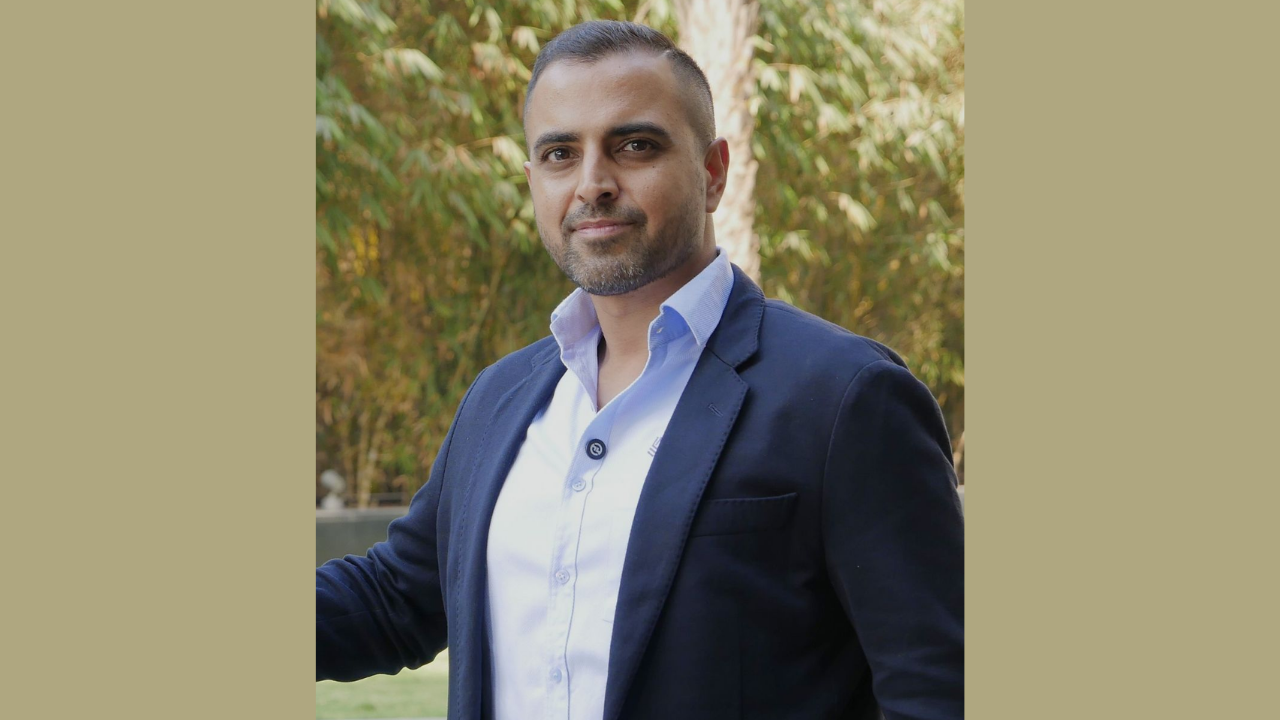
In Conversation With Pavit Singh: Founder & Partner- Ileseum Sports & Clubs LLP
1. What was the core vision behind launching Millennium Club in Wakad, Pune, and what gap in the market does it aim to address?
The core vision behind Millennium Club was to create a fully integrated modern lifestyle and community ecosystem designed around how urban India actually lives today.
Historically, India’s club culture existed at two extremes — ultra-exclusive legacy gymkhanas at one end and fragmented hyper-local gyms or sports facilities at the other. We identified a massive whitespace in between, where nearly 90% of urban India actually exists.
Modern consumers today are looking for physically healthier, mentally stronger, emotionally balanced, and socially connected lifestyles. Millennium Club was conceptualised to address that need through an ecosystem combining sports, wellness, hospitality, dining, entertainment, recovery, and community engagement.
At the same time, developers across India were increasingly building large residential ecosystems but struggling to create meaningful long-term engagement, lifestyle identity, and social stickiness within those communities. Millennium Club was built to solve both those problems simultaneously.
Today, Ileseum operates across 13 cities in India, with 27 operational clubs, over 35 clubs under construction, and more than 100 projects under discussion nationwide. We are partnering with some of India’s largest developers including Phoenix Mills, Raheja Universal, Lodha, Godrej Properties, Brigade Group, Embassy Group, Birla Estates, Prestige Group, Signature Global, and Hiranandani Group—to build these ecosystems at scale. That scale gives us unique visibility into how urban India is evolving socially, physically, and behaviourally.
2. How do you define the idea of an “integrated sports, wellness, and lifestyle ecosystem” in the Indian context today?
An integrated ecosystem today means much more than simply placing a gym, café, and swimming pool inside a clubhouse. It means building recurring engagement and community behaviour. Consumers today no longer want fragmented experiences. They do not want fitness in one place, wellness elsewhere, social interaction disconnected from hospitality, and entertainment separated from lifestyle.
At Ileseum, we believe infrastructure without programming eventually becomes inactive real estate. That is why our focus is equally operational and experiential.
Across our ecosystems, we curate over 250 annual experiences, including sports leagues, screenings, fitness events, comedy shows, networking evenings, music nights, wellness workshops, family programming, amateur tournaments, and F&B-led social experiences. Those engagements create participation. Participation creates relationships. Relationships create community. We strongly believe the future of clubs is not infrastructure-led — it is engagement-led. A swimming pool, gym, or sports court by itself does not create community. Consistent participation does. That is one of our biggest differentiators.
3. What makes Millennium Club different from a conventional sports club or hospitality destination?
The biggest differentiator is that we understand both hospitality economics and developer economics simultaneously. Most hospitality operators do not understand residential ecosystems, HOA structures, RWA expectations, CAM optimisation, RERA sensitivities, long-term resident behaviour, or community retention strategies.
Our background allows us to operate directly within those environments while creating measurable value for developers. That value exchange is the reason our model works. We help developers improve leasing velocity, strengthen resident retention, increase property value perception, activate underutilised amenities, and create differentiated lifestyle positioning for residential ecosystems.
Our model is fundamentally asset-light. Unlike traditional hospitality operators, we typically do not invest heavily into infrastructure capex or operate under large fixed rental structures. Instead, developers undertake the capital expenditure while Ileseum manages operations, hospitality, sports infrastructure activation, engagement, and community programming.
That structure only works because of the value exchange we create for developers and residential ecosystems. That combination of hospitality execution, sports infrastructure understanding, residential ecosystem management, and real estate strategy is extremely difficult to replicate at scale.
4. How do you see India’s sports economy evolving over the next decade, particularly from a hospitality and lifestyle perspective?
India’s sports economy is entering a transformational phase. For years, sports in India were viewed primarily through professional competition or passive fandom. Today, sports are becoming deeply integrated into lifestyle, wellness, identity, social behaviour, and community culture. Over the next decade, we will see significant growth across sports-led hospitality, wellness ecosystems, recovery infrastructure, amateur participation, racquet sports, live sports entertainment, and integrated lifestyle destinations. What is particularly exciting is that this demand is no longer limited to metros.
Markets such as Solapur, Raipur, Indore, Lucknow, and other aspirational urban centres are showing very strong demand for premium community and lifestyle infrastructure. Consumers in these cities increasingly want the same quality of wellness, hospitality, sports, and social ecosystems that historically existed only in large metros. We are also seeing significantly higher participation from women across these ecosystems — both from a workforce perspective and through fitness, wellness, sports participation, and club memberships.
The future of India’s sports economy will be deeply community-driven, experience-led, and integrated into everyday lifestyle.
5. What does success look like for Millennium Club over the next few years?
For us, success extends far beyond membership numbers or physical expansion. The larger vision is to build India’s leading platform for integrated community, wellness, sports, and lifestyle infrastructure. Today, Ileseum has 27 operational clubs across India, over 35 clubs currently under development, and more than 100 projects under discussion across multiple cities and developer ecosystems.
Over the next decade, we envision building a nationwide network of modern “third spaces” that redefine how urban India experiences sports, hospitality, wellness, leisure, and community life. At the same time, through our hospitality ecosystem partnerships including Aufside Hospitality, we are also building large-scale sports-led F&B ecosystems designed around recurring engagement and community participation. We believe the future of Indian urban infrastructure will be deeply experience-led.
Developers will increasingly compete not only on square footage and amenities, but on community quality, wellness ecosystems, engagement levels, and lifestyle programming. That is the space we are building for long term.
Rapid Fire
- What trend will define India’s sports economy?
Community-led active lifestyles
- What sport best reflects your leadership style?
Squash; strategic, high intensity, and endurance-driven
- One word for the future of experiential hospitality in India?
Belonging